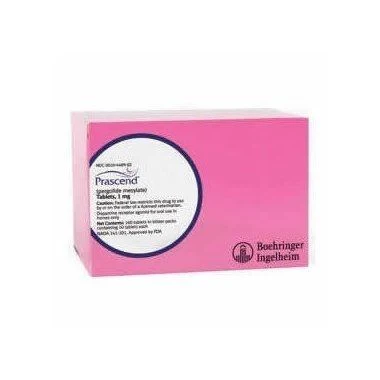
Prascend 1mg x 60 | Prescription Required
Prascend is to be used orally and to be given once daily.
To prepare the medication, dissolve tablet in a small amount of water, molasses or other sweetener and administer with a syringe.
Do not crush the tablets.
The dose for the medication is as follows:-
200-400kg - 1/2 tablet daily
- 401-600kg - 1 tablet daily
- 601-850kg - 1 & 1/2 tablets daily
- 851-1000kg - 2 tablets daily
Do not use Prascend in horses under 2 years of age.
This medication is not recommended to use in lactating horses.
This should not be used in food producing animals.
If you are caring for a horse who has been diagnosed with PPID, scheduling regular veterinary visits is important.
Your veterinarian will regularly check on your horse to ensure proper dosing and that clinical signs are not advancing.
Working with your veterinarian is key to managing PPID.
Your veterinarian will advise you on a customized diet and exercise plan that will help your horse maintain the correct weight.
Horses with PPID often do well on the low-sugar, low-starch diets if considered to be prone to laminitis.
Original: $112.73
-65%$112.73
$39.46Product Information
Product Information
Shipping & Returns
Shipping & Returns
Description
Prascend is to be used orally and to be given once daily.
To prepare the medication, dissolve tablet in a small amount of water, molasses or other sweetener and administer with a syringe.
Do not crush the tablets.
The dose for the medication is as follows:-
200-400kg - 1/2 tablet daily
- 401-600kg - 1 tablet daily
- 601-850kg - 1 & 1/2 tablets daily
- 851-1000kg - 2 tablets daily
Do not use Prascend in horses under 2 years of age.
This medication is not recommended to use in lactating horses.
This should not be used in food producing animals.
If you are caring for a horse who has been diagnosed with PPID, scheduling regular veterinary visits is important.
Your veterinarian will regularly check on your horse to ensure proper dosing and that clinical signs are not advancing.
Working with your veterinarian is key to managing PPID.
Your veterinarian will advise you on a customized diet and exercise plan that will help your horse maintain the correct weight.
Horses with PPID often do well on the low-sugar, low-starch diets if considered to be prone to laminitis.